
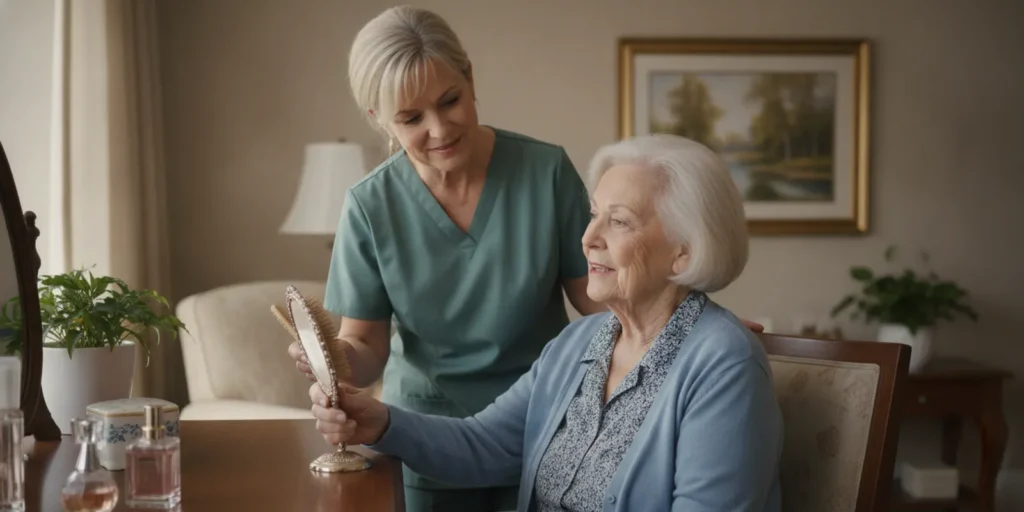
Grooming assistance for seniors can mean anything from setting out a brush to helping with bathing, shaving, dressing, or hair care. The right support depends on the person’s abilities, routines, comfort, and preferences—not simply their age. Families can make grooming easier by asking what help is welcome, protecting privacy, and noticing when a familiar task has become difficult or unsafe.
Talk with our team about care options
What does grooming assistance for seniors include?
Grooming is personal care that helps someone feel clean, comfortable, and like themselves. It may include brushing or styling hair, washing and drying, shaving, skin care, oral care, nail care, choosing clothes, and support with bathing. The person may need help with one step and manage the rest independently. Someone else may need reminders, items placed within reach, or hands-on assistance for a particular task.
There is no single checklist that fits everyone. One person may want help fastening a necklace but prefer to wash and style their own hair. Another may find it easier to accept assistance if a trusted family member explains each step. Preferences can also vary by day, energy level, pain, culture, faith, past experience, or the amount of privacy available.
It helps to distinguish grooming from medical care. Routine support with washing, dressing, or appearance is different from diagnosing a skin problem, treating a wound, or providing clinical care. If a concern appears medical, or a task is beyond the helper’s training, ask the person’s health care professional what to do and who should provide the support. A care conversation can clarify what a particular residence offers, but it does not replace medical advice.
For families comparing types of support, Shepherd Premier describes its assisted living services and memory care separately. The services and support available can vary by home, so ask about the specific location rather than assuming that every residence provides the same help.
Why can grooming become harder?
A change in grooming does not automatically mean a person needs to move or cannot make decisions. It can be a clue that a task has become tiring, uncomfortable, confusing, or difficult to complete safely. There may be a simple barrier: a slippery floor, a hard-to-turn faucet, a small button, poor lighting, a brush that is difficult to hold, or products stored out of reach.
Other changes can affect the routine. Arthritis or reduced hand strength may make a razor, comb, or fastener harder to use. Balance concerns can make standing at a sink or stepping into a tub feel uncertain. Vision changes may make it difficult to see a mirror or distinguish products. Fatigue, pain, or a disrupted schedule may make a once-simple routine take more effort. Memory or thinking changes can make it harder to sequence steps or remember what comes next.
These are possibilities to explore, not a diagnosis. A sudden or troubling change in daily functioning deserves a conversation with a health care professional, especially if it appears alongside new symptoms, pain, a fall, or a medication change. Families can describe what they have observed, when it began, and which tasks are affected. Avoid assuming that a person is being careless or difficult when the routine may now be challenging. For general information about aging and health, families can also visit the National Institute on Aging; a clinician is the right person to advise about an individual’s symptoms or care.
Start by asking what the older adult has noticed. “Would it help if we changed anything about getting ready?” is usually more respectful than “You can’t do this anymore.” Offer a choice of time, clothing, or the kind of help. Even when a person needs assistance, small decisions can preserve a sense of control and continuity.
How can families talk about personal care with dignity?
Grooming involves privacy and identity, so the way help is offered matters. Ask permission before entering a bathroom, moving clothing, touching hair, or handling personal products. Explain the next step in plain language and pause for an answer. If the person declines, avoid turning a routine task into a confrontation. Consider whether a different time, helper, or approach would feel more comfortable.
- Use the person’s preferred words. Some people are comfortable with “bathing,” while others prefer “getting ready” or another familiar phrase.
- Offer limited, real choices. Ask whether they would like to wash now or after breakfast, or whether they prefer a comb or brush. Avoid asking a question if there is no genuine choice.
- Describe help before providing it. Say what you plan to do, where you will stand, and what the person can do for themselves.
- Protect modesty. Close doors and curtains, keep a robe or towel available, and uncover only the area being washed or dressed.
- Keep the person involved. Hand over items, let them complete familiar steps, and give enough time for a response.
- Respect identity and routine. Ask about preferred clothing, hairstyle, shaving habits, cultural practices, and products rather than imposing a new standard.
Families may feel worried when an older adult refuses help, especially if they fear a fall or a health problem. Try to understand what is behind the refusal before deciding how to respond. The person may be cold, embarrassed, tired, in pain, worried about being rushed, or uncomfortable with a particular helper. A warm room, a different time of day, a familiar towel, or a clear explanation may make the task easier. If the refusal persists or creates a safety concern, discuss options with the person and an appropriate professional.
For a person living with dementia, long explanations or several directions at once may be hard to follow. Speak calmly, use short cues, and allow time for the person to process. Show one item at a time and demonstrate a step if that is helpful. Do not assume every person with dementia has the same needs or responds to the same method. Shepherd Premier’s dementia care information can be a starting point for a conversation about the support a specific home may provide.
How can you make a grooming routine safer and more comfortable?
Look at the whole routine before adding more hands-on help. A few practical adjustments may let a person continue doing more for themselves. Keep frequently used items in consistent, easy-to-reach places. Improve lighting around the mirror. Choose clothing with closures the person can manage. Reduce clutter so there is room to move. If a bathroom setup or transfer seems unsafe, do not improvise a lift or rely on an object that is not designed for support; ask a qualified professional for advice about the home environment and safe assistance.
Comfort matters as much as convenience. Make sure the room is warm enough, offer a seat when appropriate, and avoid rushing. Check that the person can hear and understand instructions. Ask whether water temperature and product scents feel comfortable. If a task causes pain, dizziness, shortness of breath, distress, or an unexpected reaction, stop and seek appropriate guidance rather than pushing through.
For bathing, decide in advance what the person can do independently and what help they want. Place needed supplies within reach before beginning, but do not leave someone alone in a situation where they may be at risk. The right level of supervision depends on the individual and setting. Families should ask a health professional or the responsible care team about any specific safety concern rather than applying a one-size-fits-all rule.
Shaving, nail care, and skin care can call for added caution. Use products and tools the person knows, and do not cut nails or manage a skin condition if you are unsure how to do so safely. Watch for a new or worsening concern and bring it to a clinician’s attention. Grooming support should not be treated as a substitute for evaluation or treatment.
Some people find it easier to follow a predictable sequence: wash face, brush teeth, comb hair, and choose clothes. Others prefer flexibility. Write down the person’s own preferences, not just a checklist of tasks. A short note might say, “Please offer the blue cardigan; I like to brush my hair before breakfast; ask before helping with my sleeves.” This helps family members or care partners offer consistent support without taking over.
Which grooming tasks may call for different kinds of help?
Hair care may be easiest when the person can sit comfortably and choose whether they want a brush, comb, or familiar style. If reaching, grip, or arm movement is difficult, offer the tool and let the person do what they can. Ask before brushing or adjusting someone’s hair, and do not assume that a change in appearance is necessary. If a person wants a haircut, help them plan the appointment or ask what options are available through their chosen provider.
Oral care can be a familiar routine, but some people may need help remembering the steps or setting out supplies. Keep the person involved and avoid forcing a toothbrush into their mouth. If oral pain, bleeding, difficulty swallowing, or another health concern appears, contact an appropriate health professional. Families should ask a dentist or clinician for advice that applies to the individual rather than relying on a general grooming tip.
With shaving, consider whether the person wants to keep shaving and what tools they prefer. If a razor feels difficult or unsafe to use, discuss alternatives with the person and seek qualified guidance as needed. Do not rush a task involving a sharp tool. Likewise, nail care may be a task the person handles independently or one that requires professional assistance. If nails are painful, unusually changed, or difficult to manage safely, ask a clinician who is appropriate to help.
Choosing clothes can be part of grooming, too. The person may appreciate help matching weather, comfort, and personal style, but should remain part of the decision. Lay out clothing only if that is welcome, and look for closures or fabrics that suit the person’s abilities and preferences. A helper can offer practical suggestions without making appearance a measure of whether care is being done “right.”
These examples are not a checklist of services every caregiver or residence provides. Ask what the individual wants, what a helper is qualified to do, and what the specific home includes. If a task involves a health condition, injury, or uncertainty about safe technique, pause and seek professional advice.
How can you plan a routine one step at a time?
A manageable routine starts with what the person already does, not with a new schedule imposed by someone else. Ask which parts are important to keep the same and which steps could use support. If the person cannot explain easily, observe without criticizing: do they pause before starting, lose track of items, or avoid a particular part of the routine? A pattern may help you identify an obstacle, but ask rather than decide what the person means.
Next, make the task simpler without removing choice. Put only the needed supplies in view, leave familiar products in their usual containers when safe, and avoid presenting many decisions at once. If someone is dressing, offering two weather-appropriate options may feel easier than opening a full closet and asking an open-ended question. If a person prefers to choose from more options, preserve that preference. The point is to support the individual, not make everyone follow the same script.
Agree on a pause signal. The person might say “stop,” raise a hand, or turn away. A helper can also watch for signs of discomfort and check in before continuing. If a task can safely wait, respect a request to pause and return to it later. If there is a concern that cannot wait, explain it gently and seek professional advice when needed. Consent and comfort should not be treated as obstacles to get past.
Afterward, notice what worked. Did the person prefer privacy, a seated position, a certain time, or fewer instructions? Keep notes short and factual. Instead of writing “was difficult,” record, “Asked to stop when the bathroom was noisy; later completed face washing after the room was quiet.” That phrasing helps family members look for a practical adjustment and avoids defining the person by one difficult moment.
Keep the routine flexible. A person may have a preferred sequence most days but want to change it sometimes. If the person’s abilities change, revisit which steps they want to handle and which require assistance. A routine should create familiarity, not become a rule that overrides the person’s wishes. In a residential setting, ask how the home can learn these preferences and what happens when the day’s plan needs to change.
What if a person with dementia resists grooming?
Resistance can be a sign that the situation feels confusing, uncomfortable, or too demanding. It may also be the person’s way of saying no. Start with respect and curiosity: stop, give space, and look for a reason. Consider pain, cold, fatigue, an unfamiliar helper, noise, too many instructions, a product the person dislikes, or a step that feels exposing. Avoid arguing about whether a task “needs” to happen right then.
Try again later if it is safe to wait. Keep the approach calm and brief. Offer one step at a time, demonstrate with your own actions, or invite the person to begin a familiar part of the routine. A trusted person may be able to help, but the older adult’s comfort and consent remain important. If a particular approach repeatedly causes distress, discuss it with a health professional or care team familiar with the person.
Do not use force or deception to complete ordinary grooming. If a person cannot understand or communicate a decision, the family and care team should still seek the least distressing, respectful way to address essential needs. Any urgent health or safety issue should be handled with professional guidance. A person’s diagnosis alone does not tell you what they can do, what they want, or how much support they need.
A simple record can reveal patterns. Note the time, task, setting, who was present, what seemed to help, and what led to discomfort. This is not a scorecard or a way to pressure the person. It can help families notice that, for example, hair care goes more smoothly after a rest or that a certain product irritates the skin. Share relevant observations with the person’s clinician or care team.
When is family help enough, and when should you explore more support?
There is no single threshold that tells every family when to seek help. Consider how often assistance is needed, whether the person feels safe, how they feel about the routine, and whether the current arrangement is sustainable for everyone involved. A family member may be able to help with a weekly haircut appointment but not be available every morning. Another household may share tasks comfortably. What matters is whether the support reliably meets the person’s needs and respects their choices.
Signs that a conversation may be useful include repeated difficulty completing personal care, increasing worry about bathroom safety, missed routines because a helper is unavailable, or growing tension between a family caregiver and the older adult. These signs do not by themselves determine the right setting. They are prompts to ask what is changing and what kinds of assistance might make daily life more manageable.
Options may include adjusting the home setup, sharing tasks among family, arranging in-home support, or exploring a residential care setting. Assisted living and memory care are not the same as skilled nursing, and they should not be treated as interchangeable. The appropriate choice depends on the person’s needs, preferences, and the specific services a provider can confirm. A care conversation can help a family ask about fit; it is not a diagnosis or a promise of admission.
Caregivers should also consider their own limits. If personal care tasks are creating fear, exhaustion, or conflict, it may be time to ask for help instead of waiting for a crisis. Shepherd Premier offers a caregiver support resource for families thinking through support options. The needs of the older adult and the caregiver both belong in the discussion.
How does grooming support differ across care settings?
Support varies by provider, location, and individual plan. A general label such as assisted living or memory care does not answer every question about who helps with grooming, when that help is available, or what tasks are included. Ask for a clear description from the specific home or provider under consideration.
- At home with family: A relative may offer reminders, set up supplies, or help with selected tasks. The family should be realistic about timing, physical ability, privacy, and backup plans.
- In-home support: The scope depends on the agency, worker, service arrangement, and the person’s needs. Ask what tasks the provider can perform, how schedules work, and what happens if needs change.
- Assisted living: A residence may provide help with daily activities, but details should be confirmed for the named home and person. Ask how personal-care needs are discussed and what support is available.
- Memory care: A memory-care setting is designed around support for people living with dementia, but routines, staffing, services, and fit still vary. Ask how the home approaches personal care and responds to distress or changing needs.
- Skilled nursing or clinical care: This is distinct from routine residential assistance. If a person needs medical or nursing services, discuss the need with a qualified clinician and verify what a particular setting is able to provide.
Shepherd Premier describes assisted living and memory care at different locations; the company’s available care types are not identical at every home. When reviewing location information, confirm that the service listed matches the home you are considering. Ask directly whether the support your family member needs is available at that address and how it is arranged.
How can you understand the person’s preferences and boundaries?
Grooming choices are closely tied to personal identity. A person may have followed the same hairstyle, shaving routine, or clothing tradition for decades. A change that seems small to a family member can feel like a loss of control to the older adult. Ask about the meaning behind a preference before suggesting that it be changed. If the person wants to keep a familiar routine, consider what support would make that possible.
Privacy expectations differ from person to person. Some people are comfortable with a relative helping with every step; others prefer a professional caregiver or want family to wait outside. Ask who the person is comfortable having present, and how they want the helper to explain the task. Where a person has religious, cultural, or modesty practices affecting personal care, invite them to share what they want respected. Do not assume those preferences based on appearance, background, or family role.
Likewise, ask about products and sensitivities rather than switching to something convenient without discussion. A scent, texture, or familiar brand may matter. If a product causes irritation or a health concern, ask a clinician about an appropriate alternative. Families can label familiar items clearly and make sure the relevant helper knows which products the person prefers, while still following any safety guidance.
For a person who has difficulty communicating, listen to more than spoken words. Facial expression, body movement, hesitation, and attempts to move away can signal discomfort. These signs do not always explain the reason, so respond by pausing and checking in rather than guessing. A trusted family member may help interpret familiar communication, but should not dismiss the person’s current response. If the person appears distressed, stop when it is safe and consider another approach.
Family members can disagree about what should happen. One relative may focus on cleanliness, while another prioritizes the older adult’s choice to skip a routine. Try to separate immediate health or safety concerns from preferences about appearance. If a concern is medical, ask a qualified professional. For everyday preferences, include the older adult in the discussion to the extent they wish and are able. Agree on a practical plan that does not turn grooming into a daily test of cooperation.
How can families share support without creating confusion?
When several relatives help, inconsistent approaches can be frustrating for the older adult. One person may rush, another may offer too many choices, and a third may assume the person needs more help than they do. A brief shared note can keep everyone aligned on the person’s own preferences: which tasks they like to do themselves, what assistance they welcome, what products they use, and how they signal a need for a pause.
Decide who will coordinate updates and how the family will share them. Keep the older adult involved in those decisions whenever possible. Avoid passing around sensitive details that are not needed to provide support. If a hired helper or residential care team is involved, ask how information should be shared and who is responsible for updating the routine when something changes.
It can also help to agree on what family members should do when plans differ. For example, if one person believes a shower must happen immediately and the older adult says they want to wait, the family can pause and review whether there is a real time-sensitive health or safety concern. If not, offer another time and communicate the plan to the next helper. If there is a medical issue, follow qualified professional guidance rather than debating it among relatives.
Caregiving should not depend on one person quietly absorbing every task. Discuss what each family member can realistically do, including availability, physical capacity, and emotional comfort. If a task feels unsafe or causes ongoing conflict, say so and look into additional support. A family meeting, caregiver resource, or professional care conversation may help clarify options. The purpose is not to assign blame; it is to make a plan that works for the older adult and the people assisting them.
How should families ask about services and costs?
When comparing residential care, ask how personal-care assistance is handled at the specific location and what is included in that home’s current written pricing. Do not assume that grooming, bathing support, supplies, salon services, or other extras are all bundled into a quoted rate. Ask whether prices depend on the person’s assessed needs, what services might have separate charges, and how changes are communicated. Request a written explanation for the home and care plan being considered.
These questions matter because a general service description is not an individualized quote. Confirm the person’s care needs, the home’s ability to meet them, current availability, and price separately. Ask whether the home accepts the intended payment arrangement and which documents or next steps the family should expect. Shepherd Premier’s public information describes private-pay arrangements and acceptance of VA benefits and long-term care insurance, but families should confirm payment details and eligibility directly for their situation. Medicaid is not accepted by Shepherd Premier.
Keep a record of what is confirmed and what remains uncertain. A useful note might distinguish “staff described help with dressing at this location” from “family still needs to confirm whether a particular grooming service has a separate fee.” This prevents a broad conversation from being mistaken for a promise about a specific service. It also gives the family a focused list for follow-up before making a decision.
What should families ask when comparing grooming assistance?
Use questions that prompt specific, practical answers. Instead of asking only, “Do you help with grooming?” ask what help means, how the home learns preferences, and how it adapts when a person’s needs change. Write down the answers and note anything that needs follow-up.
- Which grooming and personal-care tasks can staff help with at this location?
- How do you learn the resident’s preferred routine, products, clothing, and privacy needs?
- How does the resident participate in tasks they can still do independently?
- How are bathing or grooming preferences documented and shared with the appropriate care team?
- What happens if someone declines help or becomes distressed during a routine?
- Can a family member share familiar techniques or products that help the person feel comfortable?
- How does the home respond if a new concern appears to require medical attention?
- Are there limits on the tasks provided, or needs the home cannot meet?
- How often are needs and preferences revisited if the person’s abilities change?
- What services are included in the quoted price, and are any personal-care-related services billed separately?
Ask for examples without requesting private information about another resident. You might ask how the team helps a new resident settle into a routine, or how it would approach a person who wants to do as much as possible independently. The answer should explain a respectful process rather than promise that every request can be met. Ask who will clarify any details that are not available during the first conversation.
For families comparing several homes, use the same questions at each one. A short written comparison makes it easier to distinguish confirmed details from assumptions. Record the location, the person who answered, and any follow-up date. Do not rely on a general description of a provider’s services to assume that each property offers the same arrangements.
How can a family prepare for a care conversation?
A useful conversation starts with the older adult’s own perspective. If possible, ask what feels important to them before the family makes a list. They may value doing a particular part of grooming alone, keeping a long-standing schedule, wearing familiar clothes, or having help from someone of a particular gender. A family can explain its concerns while still leaving room for the person’s priorities.
Bring concrete observations rather than labels. “Dad has needed help fastening his shirt three mornings this week” is more useful than “Dad can’t manage anymore.” Include what the person can do, what they prefer, what has changed, and what you have tried. If there is a medical concern, share it with the health care professional and ask what information or evaluation is appropriate.
It can also help to gather practical details: current routines, products that work well, sensitivities, mobility considerations, and the name of a trusted contact. Share only information that is relevant and appropriate. Ask how a provider records preferences, who can access that information, and how families can communicate updates.
When speaking with a residential provider, be direct about the support needed and ask whether the specific home can meet it. Discuss care fit, current availability, and individualized pricing separately. A tour lets a family see a setting and ask questions, but it does not guarantee admission or a particular rate. Families can review the company’s senior living guides as another way to prepare questions and compare choices.
What can families learn from a visit?
A visit can help you understand the environment and ask how personal routines are handled. Notice whether residents have access to private space, whether the surroundings seem calm enough for conversation, and whether staff explain what they are doing in a respectful way. These observations are only a starting point; a brief visit cannot establish the quality of every interaction or guarantee how a person’s needs will be met.
Ask whether you can discuss the daily routine with someone who understands the specific home. Find out how a resident’s preferences are recorded and updated, how a family can raise a concern, and what happens when a task cannot be completed as planned. If the older adult is comfortable participating, invite them to ask their own questions or say what they notice. Give them time to respond without answering every question on their behalf.
It may be helpful to talk about a real example. Explain that your family member prefers to wash their face independently but may need help with buttons, and ask how the home would explore those preferences. The answer should be specific enough to understand the process while avoiding a guarantee that a certain staff member or service will always be available. Follow up on exact details that affect the decision.
Families comparing settings can also use Shepherd Premier’s guide to comparing senior living communities. Keep the focus on the person’s needs, the home’s confirmed services, and the questions that remain open.
What are common questions about grooming assistance for seniors?
Does needing help with grooming mean a senior needs assisted living?
No. A need for help with one grooming task does not by itself determine a person’s care setting. First consider the specific task, the person’s wishes, safety, available family or in-home support, and whether other daily needs have changed. A qualified care conversation can help explore options. A provider should assess fit for its own services rather than infer it from age or one task.
How can I help without taking away independence?
Ask what kind of help the person wants, offer choices, and allow time for the steps they can do themselves. Set out supplies or give a reminder before stepping in physically. Explain each action and ask permission. Revisit the approach if the person seems uncomfortable. Independence is not all-or-nothing; a person may welcome support with one part of a routine while managing the rest.
What should I do if my parent refuses to bathe or be groomed?
Pause and avoid arguing or forcing the task. Ask whether something feels uncomfortable, and consider timing, privacy, temperature, pain, fatigue, or the helper. Offer another time or a smaller step if appropriate. If the concern continues, creates a safety risk, or may reflect a health change, consult the person’s health care professional or care team for guidance.
Can memory care help with grooming?
Support depends on the services and routines of the specific memory-care home and the needs of the resident. Ask how that location approaches personal care, learns preferences, and responds when someone is unsure or distressed. Do not assume that every memory-care home offers identical tasks or that a particular person will automatically be a fit.
Is grooming assistance the same as nursing care?
No. Help with ordinary daily grooming is different from clinical assessment or treatment. If there is a wound, significant skin change, pain, or another medical concern, seek advice from a qualified health care professional. Ask the provider what it can support and where clinical care must come from.
Request a home-specific care conversation
What is a useful next step?
Start with a respectful conversation about what the older adult wants and what part of grooming feels difficult, if any. Make small adjustments where they help, seek professional advice for health or safety concerns, and compare care options using questions tied to the specific person and home. The goal is support that protects dignity, choice, comfort, and familiar routines while giving families a clearer way to plan.