
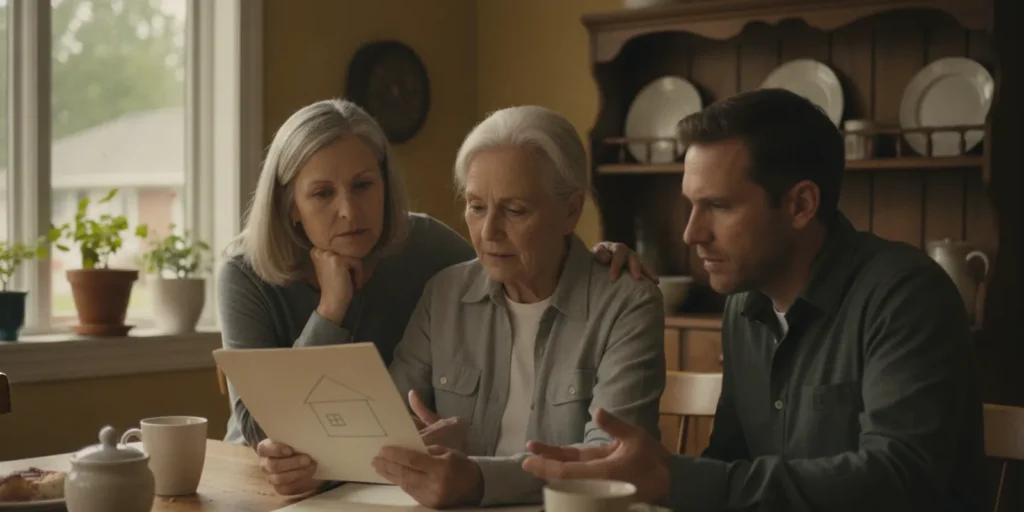
Learning how to move an elderly parent into assisted living is not only a matter of choosing a date and packing boxes. It is a family decision shaped by safety, changing care needs, finances, and your parent’s wishes. A thoughtful process helps everyone understand the options without making promises before a particular home has discussed fit and availability.
What should you clarify before discussing a move?
Begin with what has changed, rather than starting with the conclusion that a move must happen. Write down specific observations: difficulty preparing meals, missed medication routines, a fall, increasing confusion, or a family caregiver who cannot continue providing the same support. These examples help keep the discussion grounded. They also show which questions should go to a clinician, which belong in a conversation with a residence, and which are family preferences.
Separate observations from interpretations. “Mom left the stove on twice this week” describes something that happened. “Mom can no longer live alone” is a conclusion that may need more information. Note the date, what was happening, what assistance was available, and whether this is a new pattern. If there is an immediate health or safety concern, contact an appropriate health professional or emergency service rather than waiting for a housing decision.
Include positive details, too. What does your parent still do independently? What routines are important? Which relationships, interests, and responsibilities do they want to keep? A balanced picture avoids defining someone only by tasks that have become difficult. It also helps a residence understand the person’s strengths and preferences, not just a list of support needs.
Ask your parent what matters most in daily life. They may want privacy, a familiar meal schedule, proximity to friends, the ability to bring a favorite chair, or continued choice about activities. Write their priorities in their own words when possible. If family members disagree about what matters, ask the parent rather than guessing. Preferences can guide which homes to consider and which questions to ask on a visit.
How can you begin a respectful conversation?
Choose a calm time when nobody is rushing, exhausted, or already upset. If possible, talk in a familiar place and make room for your parent to explain what feels difficult before presenting a plan. Start with open questions such as, “What parts of the day have become harder?” or “What kind of help would make things feel more manageable?” Listen to the answer without immediately correcting, arguing, or trying to persuade.
Use concrete observations gently. Instead of saying, “You are not safe here,” try, “I noticed the steps have been harder this month. How do you feel about them?” Describe what you saw and invite your parent’s view. They may remember the situation differently, or have an explanation you did not know. The purpose is to learn what is happening, not to win an argument.
It may help to have one family member lead the conversation, especially if a large group would feel overwhelming. Beforehand, agree on the concern you want to discuss and avoid surprising your parent with a decision that seems already made. Ask whether they would like another trusted person or their health professional involved. If the conversation becomes heated, pause and return to it at an agreed time rather than turning the visit into a debate.
When a parent says no, try to understand the reason. The concern may be cost, fear of losing control, leaving a pet or neighborhood, uncertainty about what assisted living includes, or simply not feeling ready. Reflect what you hear: “You are worried that moving means giving up your privacy.” Then ask what information might help. Answer what you can, acknowledge what you do not know, and offer a smaller next step.
A visit or care conversation can be exploratory. It does not require a commitment and does not guarantee admission, a room, or a particular rate. Explain that distinction clearly. Your parent might agree to look at a location, ask about a typical day, or review written information without deciding to move. A modest step can make an unfamiliar choice feel less final.
How do you distinguish care options and assess fit?
Assisted living generally involves support with aspects of daily life, such as personal care and meals. Memory care is designed for people living with dementia who may need a different environment and type of support. Neither term should be treated as interchangeable with skilled nursing or higher-acuity medical care. The details of what a specific residence can provide depend on that home and the person’s needs.
Make a list of the help needed now and what may be needed soon. Include bathing, dressing, grooming, mobility, meals, medication support, memory-related supervision, sleep routines, and social connection. For each item, note what your parent does independently, what help is needed, how often it is needed, and whether the need has changed. This turns a general statement such as “more help is needed” into useful questions for a home-specific discussion.
Include the person’s own perspective beside each task. Someone may accept help with meals but strongly prefer privacy while dressing. They may want reminders rather than someone taking over a routine. A support plan should take preferences seriously while being honest about the help required. Ask a residence how it learns residents’ routines and preferences, and how staff discuss changes with the resident and family.
For health questions, consult the parent’s health professional. A family’s notes and a residence’s care conversation are not a diagnosis or a substitute for clinical advice. The aim is to ask whether the type of support offered at a specific home may be appropriate and whether other care or outside services may be needed. Do not assume that all residences offer the same medical coverage, staffing, or memory-care capabilities.
| Area to consider | What to record | Question for the home |
|---|---|---|
| Daily activities | Tasks needing help, frequency, and preferred level of assistance | Which daily supports can this residence provide? |
| Memory and safety | Observed patterns, supervision concerns, and relevant context | How does this home discuss care fit and changing needs? |
| Routine and preferences | Sleep, meals, privacy, activities, relationships, and interests | How can a resident’s preferences be reflected in daily routines? |
| Costs and payment | Quoted charges, inclusions, possible extras, and payment sources | Can the home provide a current written itemization? |
| Family communication | Who the parent wants involved and how often to connect | Who should the family contact with questions or updates? |
Use the list to learn, not to make a final eligibility decision on your own. A residence needs to discuss its own care scope and process. If a need is outside that scope, ask what the home cannot provide and what alternatives the family might consider. A clear boundary is useful. It can prevent a mismatch and help everyone plan next steps with realistic expectations.
How can you research residences and ask useful questions?
Build a short list around care type, location, access for family visits, and practical needs. A provider’s service page can help identify what it says it offers, but confirm details directly with each residence. Shepherd Premier has information about assisted living services and a separate overview of memory care. These service descriptions are a starting point; services, staffing, room types, pricing, and availability may differ by home.
Use a short question list so that a tour or conversation does not become an information overload. Start with the questions that affect suitability: what care is available at this location, how it discusses whether a person’s needs are a fit, what it cannot provide, and how changes in care needs are addressed. Then ask about daily life, room choices, communication, costs, and what the next steps would involve.
- What daily assistance and care are available at this specific residence?
- How does the home learn about a prospective resident’s needs and preferences?
- What circumstances might mean the home is not an appropriate fit?
- What room types are available, and what is currently open to discuss?
- What does the quoted price include, and which services may cost extra?
- How are medication support and changing care needs handled at this home?
- How can family members communicate with the appropriate team member?
- What happens if a resident’s needs change beyond what this home can provide?
- What is the process and expected sequence after an initial conversation?
Ask for current, home-specific information rather than relying on an older online price or a general description. Request a written breakdown of recurring charges, one-time fees, included services, and possible additional costs. Shepherd Premier’s locations page can help families identify homes to ask about. A listed location or published bed count does not show current vacancies or establish that a particular person will be admitted.
During a visit, notice the experience without treating one moment as proof of how every day will feel. Is it easy to find the entrance and understand the layout? Are residents able to spend time in a way that seems comfortable to them? Do staff answer questions clearly? Are there opportunities for both social interaction and quiet? Ask how the home approaches these matters rather than assuming what you see during a brief visit is the whole routine.
Take notes soon after leaving. Record what you learned, what you still need to verify, who answered, and any promised follow-up. If family members visit separately, use the same question list so the details can be compared fairly. A difference in impressions is a prompt to ask another question, not necessarily evidence that one person is wrong.
The resource Should You Move Your Parent Out of Assisted Living? discusses the thought involved in senior-living decisions. Its focus is not a substitute for checking the details of a move into a particular residence, so use it only as general context and confirm care, cost, and availability directly.
How should you plan the practical steps?
Once your parent is willing to explore a move, create a flexible sequence instead of imposing a rushed deadline. The process may involve collecting information, a care conversation, a visit, reviewing costs and agreements, arranging a date, and planning the transition. Timing depends on your family’s circumstances, the home’s own process, and current availability. Do not promise a move-in date until the home has explained its process and confirmed what is possible.
- Gather a concise picture. Prepare notes about daily routines, current help, observed changes, preferences, medications, and emergency contacts. Ask the home how it prefers to receive personal or medical information, and share sensitive details only through appropriate channels.
- Make an initial inquiry. Explain what prompted the family to explore options and ask what the next conversation should cover. Make clear what you know and what remains uncertain. An inquiry is a chance to understand the process, not an admission decision.
- Discuss care fit and questions. Use the list of support needs and preferences. Ask about the home’s care scope, limitations, process for evaluating fit, and how it handles changes. Bring the parent into the discussion as much as they want.
- Visit if your parent agrees. Let them participate in choosing when to go and what to look at. Ask what would make the visit useful, whether that is seeing a room, learning about meals, or understanding how a typical day is organized.
- Compare written details. Review costs, services, policies, and any agreement carefully. Ask for clarification before signing, and consider consulting a qualified adviser about legal or financial questions.
- Plan the move together. Agree on what to bring, who will help, what needs to be arranged, and how the first days might look. Avoid packing, donating, or discarding belongings without involving your parent whenever possible.
- Stay connected afterward. Agree on visits and communication, ask how your parent is adjusting, and raise questions with the appropriate person. Keep notes about issues that need follow-up instead of assuming a difficult moment will resolve on its own.
Make the sequence concrete with a simple task list. For each action, write the responsible person, the information needed, and the next check-in date. For example, one person might ask a residence for its written cost details; another might ask the parent’s clinician about a health concern; the parent might choose whether to visit and which questions matter most. Do not turn the list into a rigid project plan that removes the parent from decisions.
Build in time for unanswered questions. A family may need to clarify a current housing arrangement, discuss finances, or revisit a care concern. Keep these tasks separate from the decision itself when possible. A lease date or home sale can create pressure, but it does not answer whether a particular residence can meet the person’s needs. Ask what flexibility exists before making commitments to a moving date.
For more preparation and care-choice topics, review Shepherd Premier’s senior care guide. A checklist can help organize the process, but it cannot replace discussion of a specific home’s policies, care scope, and your parent’s preferences.
What if your parent refuses to move?
A refusal is information, not a reason to end the relationship or force a decision in one conversation. Ask what feels unacceptable and reflect it back: “You are worried you will lose your privacy,” for example. Then ask whether there is a smaller question you could answer together, such as what a typical day looks like, whether a familiar item can come along, or what kinds of support are available.
Offer choices where possible. Your parent might choose which home to learn about, who joins a conversation, what they want to ask, or when to revisit the topic. If they are not ready for a visit, ask permission to share information or involve a trusted professional. A pause can preserve trust while the family gathers facts. Agreeing to explore is different from agreeing to move.
Do not use pressure tactics such as presenting a move as already decided, threatening to withdraw affection, or secretly clearing a home. Such actions can undermine trust and make future conversations harder. If safety is becoming an urgent concern, describe the specific situation and seek appropriate professional guidance. A serious concern deserves action, but it still needs a thoughtful response rather than a family argument disguised as a plan.
Do not assume that a relative can make every decision on an older adult’s behalf. Decision-making authority depends on the person’s circumstances, applicable documents, and law. If there is disagreement about capacity, authority, or urgent safety, seek guidance from qualified legal or health professionals. In an immediate emergency, contact emergency services. A residence can explain its own process, but should not be treated as the source of legal authority.
Families may need support for the caregiver as well as the older adult. A conversation about caregiver support options can help identify ways to share responsibilities while exploring longer-term arrangements. Support for a caregiver does not, by itself, resolve whether a particular residence is suitable. It can make space for clearer discussions and help a family avoid relying on one exhausted person to coordinate every task.
How can you make a transition feel more familiar?
If a move is agreed, involve your parent in the choices that remain theirs. Let them select meaningful photographs, clothing, books, or a familiar chair if the room permits. Ask what objects would help the new room feel recognizable, then confirm the room’s size and policies before bringing bulky items. Familiar belongings are not a substitute for care planning, but they can help the space reflect the resident rather than feeling like an anonymous room.
Discuss routines that bring comfort, including preferred wake-up times, favorite foods, hobbies, social preferences, and times when the person wants quiet. Share these details with the home and ask how staff can learn them. Be specific: “She likes to read after breakfast” is more useful than “She likes a routine.” If a preference cannot be accommodated, ask what alternatives might work and explain the reason to your parent without making promises on the home’s behalf.
Keep the first days manageable. A predictable visit plan, familiar objects, and calm introductions may reduce the number of new decisions at once. Ask your parent whether they prefer short visits or longer ones, and be ready to adjust. Some people may want company; others may need quiet time to become familiar with a new setting. Do not assume there is one adjustment pattern that applies to everyone.
Avoid promising that every worry will disappear immediately. Moving can bring relief and sadness at the same time. Invite your parent to describe what feels comfortable or difficult, and listen for practical concerns that can be addressed. If communication is challenging, share specific observations with the residence and ask who should discuss them with you. The goal is an ongoing, respectful exchange, not a one-time handoff.
Keep a transition note for the people who will support the move. It might include the parent’s preferred name, everyday routines, communication preferences, important relationships, what helps them feel at ease, and questions still awaiting answers. Confirm what information the home needs and how it should be shared. Keep sensitive details private and current. A useful note is concise enough to read and specific enough to guide a real conversation.
What should families know about costs and payment?
Compare the total expected cost, not just a starting figure. Ask what a monthly rate covers, whether care needs affect charges, which services are additional, whether one-time fees apply, and how the terms may change. Confirm the current price and conditions for the specific home in writing. Published starting prices, when available, are not a personalized quote, a complete contract, or a promise that a room is available.
Make a comparison sheet with one row for each residence and separate columns for room charges, care-related charges, included services, additional services, one-time fees, payment sources, and questions still open. Write down who supplied each figure and when. If a person gives a verbal estimate, ask whether it can be provided in writing and what assumptions it uses. Do not compare two totals until you know whether they cover the same items.
Ask which payment sources the home accepts and what documentation may be needed. Shepherd Premier’s described payment options include private pay, VA benefits, and long-term care insurance; Medicaid-funded care is not accepted. Families should confirm their individual circumstances and benefits directly and consult an insurer or benefits adviser about coverage. Do not assume that a policy or benefit will cover a particular home or service until the responsible organization confirms it.
Separate affordability from care fit, while considering both together. A home that appears financially workable still needs to be appropriate for the person’s needs. Conversely, a useful care conversation can clarify which supports are relevant before a family compares costs. If the projected cost is difficult to understand, ask for the assumptions and itemization rather than relying on a headline amount. The assisted living guide can be one starting point for organizing questions, but the residence must confirm its current terms.
A family example may help. Suppose two residences provide different monthly totals. One includes some services in its quoted amount, while the other itemizes them separately. A lower first number does not automatically mean a lower total. List the services the parent is likely to use, ask how each is priced, then compare the resulting estimates over the same period. Mark uncertain items clearly rather than inventing a figure. The point is a fair comparison, not a false appearance of precision.
How can relatives organize a shared decision?
Families often approach the question with different information and worries. One person may observe daily changes, while another lives farther away and sees the parent less often. Instead of debating who is right, agree on a shared record of what happened and what still needs to be checked. Include your parent in that record and discussion when they want to participate. Different perspectives can reveal missing information rather than prove that one relative does not care.
A simple worksheet can keep the conversation focused. Use one column for the concern, one for an example and date, one for the parent’s view, and one for the next question. A concern about meals might connect to missed meals on particular days, followed by a question about what support is available. A concern about isolation might lead to asking which activities or relationships the parent wants to maintain. This converts broad accusations into small questions that can be answered.
Identify who will handle each task. One person might contact residences, another might organize financial information, and another might help arrange a conversation with the parent’s clinician. Ask your parent which relatives they want involved. Choose a point person to share updates so the parent does not receive conflicting messages, but make clear that coordination is not the same as taking over decision-making authority.
Agree on how you will communicate. A brief update after a call or visit can record what was learned, what remains unresolved, and who will follow up. Avoid forwarding every worry to the entire family without context. If one relative is responsible for a task, set a reasonable check-in date instead of repeatedly asking for an update. Clear roles lower the chance that important questions are lost or duplicated.
Set a time to revisit the conversation rather than asking for an answer every day. If your parent is willing, agree on a date to review what the family has learned. If they are not ready, ask whether they would prefer to pause or discuss one concern. Regular, respectful check-ins are more useful than turning each visit into a debate about moving. If relatives remain divided, consider whether a neutral professional can help the family listen and organize questions.
What should you bring to a care conversation?
Bring enough information to explain the situation, but do not wait until every question is solved before contacting a residence. A concise summary might include your parent’s preferred name, general daily routine, current support, mobility or memory concerns, what prompted the inquiry, and what the parent hopes to preserve. Ask how the home prefers to receive medical or personal information. Avoid sending sensitive documents through an unverified channel or sharing more than is needed for the conversation.
Bring questions about daily life as well as services. Ask how new residents are introduced to routines, whether there are opportunities for quiet time, how families can share preferences, and whom to contact when something changes. Ask what the home cannot provide. A boundary is useful information. It can show that another option or additional professional guidance should be considered before making a decision.
If several relatives attend, decide who will take notes and who will ask follow-up questions. Make room for the parent to speak first or ask their own questions if they want to. After the conversation, write down what was answered, what remains uncertain, and when the family should check back. Confirm important details in writing, especially costs, policies, care scope, and any next steps discussed. A conversation is a starting point, not a substitute for reviewing agreements.
Bring a way to keep track of the parent’s preferences, too. Ask whether they want a family member to speak for them on a particular topic or prefer to answer themselves. Check after the meeting whether they felt heard and whether they want to continue. Someone can agree to a conversation and still need time to process what they learned. The next step should follow from what the family knows, not from a deadline created by impatience.
How can you tell whether the timing is right?
There is no single sign that applies to every family. Some people begin planning after a change in daily support; others research options before a move feels urgent. Consider whether current arrangements are sustainable, whether your parent’s needs can be met with the help available, and whether the older adult is open to exploring support. Avoid treating one difficult day as proof that a permanent move must happen.
At the same time, do not dismiss a pattern because discussing it is uncomfortable. Repeated safety concerns, unmet daily needs, or exhaustion among family caregivers deserve attention. If there is immediate danger, address it promptly with suitable professional or emergency help. For ongoing concerns, a clinician can advise on health questions, while a residence can explain its own care scope and process. Keep those roles distinct.
Families can compare more than one approach. Depending on circumstances, the discussion may include help at home, assisted living, or memory care. These options differ in setting and support, and availability varies. Shepherd Premier’s home care information can be part of a broader comparison, but families should confirm what is currently offered and whether it fits their situation. Do not assume one option is right for every person or that a service is offered at every location.
Think through practical constraints such as transportation, the family’s ability to visit, the parent’s wishes about belongings, and the timing of current housing arrangements. If a lease, home sale, or other deadline is involved, separate that deadline from the care decision itself. Ask what flexibility exists and avoid promising a move-in date until the home confirms its process and availability. It can be helpful to write down the earliest practical date and the preferred date separately.
Timing can also be revisited. A family might decide to learn about options now, have a second conversation later, and make a decision only after receiving care and cost information. If needs change, update the notes and ask the relevant professionals whether the plan still makes sense. Planning early does not force a move; it can give a family more time to ask careful questions.
What are common questions about moving a parent to assisted living?
Should I set a move date before speaking with my parent?
Usually, begin with a conversation about concerns and needs, not a date. A timeline may follow once your parent and family understand the options, care fit, costs, and the home’s process. Do not announce a date as settled before discussing it with your parent and confirming what the residence can accommodate.
Does a visit mean my parent has to move?
No. A visit is a way to learn about a setting, ask questions, and see whether your parent wants to explore further. It does not guarantee admission, a room, a particular price, or a decision to move. Ask the residence what a visit includes and what happens afterward.
What if my parent needs more help than assisted living can provide?
Describe the current needs to the home and ask how it evaluates fit and changes in care. Seek guidance from the parent’s health professional when clinical advice is needed. The appropriate level of support is specific to the person and the residence; do not assume that every home provides the same services.
How can siblings avoid arguing about the decision?
Use shared notes, distinguish observations from assumptions, and agree on the questions that still need answers. Keep your parent’s preferences central and assign practical tasks clearly. If the family remains stuck, a neutral qualified professional may help facilitate a discussion, especially when disagreements involve safety or decision-making authority.
What if the parent says no every time?
Ask what concerns them and whether there is a smaller step they would consider, such as reading information or discussing one specific question. Do not assume that refusal means the conversation is over forever, but respect the person and avoid turning every interaction into pressure. If an urgent safety issue exists, get appropriate professional guidance rather than relying on persuasion alone.
How can you take the next step?
A careful move starts with listening, gathering specific information, and confirming whether a particular home can meet your parent’s needs. Keep the process flexible, make room for your parent’s preferences, and use professional guidance for medical, legal, or financial questions. Take one manageable step at a time rather than treating a complex family decision as a single yes-or-no conversation.
Discuss care options with Shepherd Premier
When you are ready, request a home-specific conversation to discuss care fit, current availability, and individualized pricing without assuming that any outcome is guaranteed.