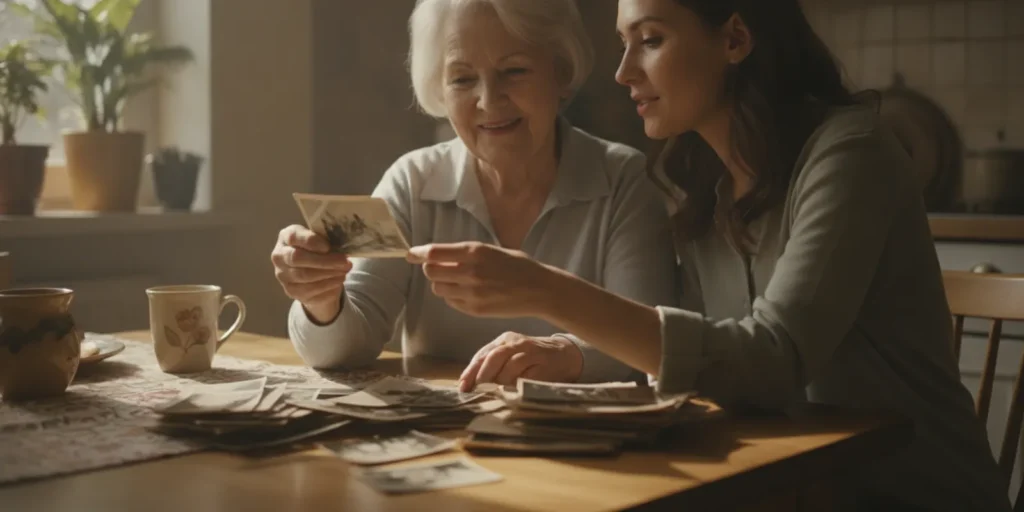
Finding enjoyable activities for seniors with dementia can start with what already feels familiar. A favorite song, folding towels, looking through family photographs, or sitting outside together may offer a comfortable way to share time. The goal is not to test memory or complete a project perfectly. It is to offer choice, connection, and a sense of purpose in the moment.
Talk with our team about care options
Dementia affects people differently, and interests and abilities can change. Try one idea at a time, keep directions simple, and notice what brings ease or enjoyment. These suggestions are supportive ideas, not medical treatment. If a task causes frustration, pause and shift to something simpler or more familiar. Activities need not fill a whole day. A few minutes of shared attention can be enough, and rest is a meaningful part of a comfortable routine.
How can familiar routines become meaningful activities?
Everyday tasks can feel engaging when they connect with a person’s past roles or habits. Invite participation rather than assigning a task. Offer a clear, manageable part of an activity, and let the person decide whether to continue. A routine may feel more recognizable than a brand-new project because its objects, movements, and setting are already known.
- Fold soft laundry: Set out a small basket of clean towels or washcloths and fold them together. Skip items that need ironing or handling chemicals.
- Prepare a simple snack: Wash fruit, arrange napkins, or stir a bowl while a caregiver manages knives, heat, and food safety.
- Sort familiar objects: Match socks, group large buttons by color, or arrange gardening tools that are clean and safe to handle.
- Care for a plant: Offer a small watering can and a sturdy plant. Keep soil, fertilizers, and small objects out of reach if they could be unsafe.
- Set the table: Place unbreakable plates or napkins and invite the person to arrange them.
Keep the setup uncluttered. Present only the items needed for the next step. If the person seems uncertain, demonstrate once, then offer help without correcting every detail. Consider adapting a routine by doing the more complex parts yourself and leaving a meaningful, safe step for the person. For example, set out two napkins rather than asking them to prepare an entire table. A familiar role can still feel recognizable even when the task is simplified.
Notice the time of day when attention and energy seem best. Someone who enjoys sorting objects after breakfast may prefer quiet later in the afternoon. There is no need to turn every routine into an activity; leave room for rest and ordinary companionship. If the person declines, accept the answer and try again another time rather than persuading them to finish.
It can help to think through the routine before offering it. What part does the person enjoy? Which steps require tools, judgment, or close attention? Could you prepare those parts in advance and leave one safe, satisfying step for them? If baking was once a favorite, for example, the shared activity might be placing pre-measured ingredients in a bowl or arranging cookies on a plate, while another person handles the oven and sharp utensils. The point is not to recreate every detail of the past. It is to find a comfortable way to participate now.
Offer simple language and one direction at a time. “Would you help me fold this towel?” is easier to act on than a string of instructions about sorting, folding, and putting away an entire basket. Allow time after speaking. If the person starts in a different way, consider whether the result matters. When the task is safe, participating on their own terms may be more comfortable than being corrected toward a particular outcome.
Some routines have a natural beginning and end. A small stack of washcloths, a few napkins to place, or a handful of photographs can make the activity feel complete without creating pressure. If the task has no clear end, a caregiver can gently signal one: “Thank you, that is enough for now. Let’s sit together.” This helps avoid a long activity becoming tiring or confusing.
What sensory activities can invite calm and interest?
Sensory experiences can be adapted to comfort and personal preference. Ask what the person enjoys, and watch for signs that the sound, texture, scent, or light is too much. A gentle option can be stopped or changed at any time.
- Listen to familiar music: Play a favorite song at a comfortable volume. Sit together, tap along, or simply listen. Avoid turning the moment into a memory quiz.
- Explore familiar textures: Offer a soft blanket, smooth fabric, or a textured object with no sharp edges. Let the person hold or touch it at their own pace.
- Enjoy a familiar scent: If the person likes it, smell fresh flowers or a known herb. Avoid strong fragrances and check for sensitivities.
- Look at photographs: Choose a few clear, meaningful pictures. Invite comments, but do not insist that the person identify names or dates.
- Spend time outdoors: Sit on a shaded porch or observe birds from a window. Consider weather, mobility, and supervision needs.
Music, photographs, or objects may prompt conversation, but they do not need to. Quiet companionship is also meaningful. Shepherd Premier has information about music and dementia care; a location-specific conversation can clarify what is offered at a particular home.
Try offering one sensory experience at a time. A room with background television, several people talking, and music playing may feel busy. Turn off competing sounds before introducing an activity, and use comfortable lighting that avoids glare. If the person pulls away, becomes tense, or asks to stop, reduce the stimulation or end the activity. Sensory preferences can change with tiredness, discomfort, or the setting, so a previous favorite is not automatically welcome on every occasion.
For photographs, a small album with a few familiar pictures may be easier to explore than a large collection. You can describe what you notice without demanding an answer: “That garden has bright flowers,” or “We are looking at a family picnic.” If the person shares a story, listen and follow their lead. The value is in sharing attention, not checking whether each detail is correct.
Sound can be adjusted in several ways. Start with one song rather than a full playlist, keep the volume low enough for easy conversation, and notice whether the person seems relaxed or wants a quieter room. Some people like to sing, while others prefer listening. If the song does not seem welcome, switch it off without asking the person to explain why. Silence can be a positive choice, too.
For a simple sensory basket, gather a few safe, familiar items with varied textures: a soft cloth, a smooth wooden object, a large fabric square, or a sturdy gardening glove. Avoid objects with sharp edges, loose pieces, strong scents, or uncertain materials. Offer one item at a time, and allow the person to hold it, set it down, or simply look. Do not insist that they name or describe it. A sensory activity can be quiet and nonverbal.
Light and temperature also shape an experience. A sunny window may be pleasant at one time of day and glaring at another. Adjust a chair, close a curtain, or move to a comfortable spot if the person squints or turns away. If outdoor conditions are uncomfortable, looking at a garden from indoors can provide a similar shared focus without requiring a walk. The activity should adapt to the person, not the other way around.
How can movement be gentle and safe?
Movement can be as simple as stretching hands, walking a short familiar route, or swaying to music while seated. Choose an activity that fits the person’s comfort and usual mobility. Do not encourage a movement that causes pain, dizziness, shortness of breath, or distress.
- Seated movement: Try slow shoulder rolls, opening and closing hands, or lifting one foot at a time while seated securely.
- Walk together: Choose a level, familiar route with a companion. Keep the walk short and return if the person becomes tired or uneasy.
- Move to music: Tap fingers, clap gently, or sway from a stable seated position.
- Water a garden: A light watering task can combine gentle movement and a familiar routine. Use a stable surface and avoid carrying heavy containers.
Use supportive footwear and clear pathways. Follow any existing guidance from the person’s health professionals about activity or mobility. When balance or supervision needs are uncertain, ask the care team or clinician what is appropriate before trying a new movement activity.
Make movement invitations brief and easy to stop. A caregiver can demonstrate a hand motion and wait to see whether the person joins. If standing or walking is part of the activity, remove loose rugs and clutter from the route, ensure the destination is familiar, and stay close enough to provide the level of supervision already needed. Do not pull or rush the person. A seated version can preserve the shared experience when walking is not comfortable that day.
Movement may fit naturally into another task: reaching for a napkin, watering a nearby plant, or gently moving hands to a song. Avoid making participation a performance or counting repetitions unless a clinician has specifically recommended an exercise plan. Stop if the person’s comfort changes, and seek professional guidance for new or concerning symptoms rather than trying to solve them with activity.
Before suggesting a walk, consider the route from the person’s point of view. Is the floor even? Is there a place to sit? Can the person recognize where they are going and how to return? Keep the outing short enough that turning back is easy. A familiar hallway or garden path may be a better fit than a crowded public place with noise, traffic, or confusing choices. If walking is not appropriate, sitting near an open window or watching activity from a safe spot can still be a shared experience.
Movement can also be built into a visit without making it the main event. Invite the person to reach for a cup placed comfortably nearby, turn a page in a book, or pass a light napkin. Keep objects within a natural reach and do not ask the person to stretch, bend, or stand beyond what feels comfortable. Caregivers should not use an activity to replace mobility instructions or professional advice. When abilities or safety needs are uncertain, ask a health professional who knows the person’s situation.
Pay attention to changes in breathing, posture, facial expression, and pace. A person may not say directly that they are tired or uncomfortable. Pausing, offering a seat, and ending early are sensible responses, not failures. If something seems suddenly different from the person’s usual ability or comfort, stop the activity and contact an appropriate professional for guidance.
What creative projects work well when abilities vary?
Creative activities do not need a right answer or a finished product. Make the steps flexible, use larger easy-to-handle materials, and focus on the experience rather than the result.
- Make a collage: Offer a few large pictures from magazines or family copies, plus glue sticks or adhesive tabs. A caregiver can handle scissors.
- Color together: Provide broad markers or crayons and large paper. Let the person choose colors or make marks freely.
- Arrange flowers: Use sturdy, non-toxic flowers without thorns. Place them in a stable, unbreakable container and supervise as needed.
- Sing or hum: Choose familiar songs and join in if welcomed. There is no need to remember every lyric.
- Make a simple seasonal decoration: Use large pieces and non-toxic materials, avoiding small parts that could be swallowed.
If a project becomes difficult, reduce the number of choices or switch to a simpler step. A caregiver might hold the paper steady, open a container, or complete a tricky part while the person continues in a way that feels comfortable.
Prepare materials before inviting participation so the person is not left waiting while you search for supplies. Put out only a few options, such as two marker colors, rather than a crowded box. Use large, easy-to-grip materials and avoid small pieces that could be swallowed. If the person prefers watching you arrange the materials, that can be participation too. Ask before displaying or discarding finished work; a project may matter because of the process or because it connects to a familiar person or occasion.
Some creative ideas can be adapted from an interest without reproducing the full original task. Someone who once enjoyed sewing might sort large fabric squares by color instead of handling needles. A person who liked cooking might choose between two safe ingredients or place napkins beside a snack. Use judgment about tools and ingredients, and keep potentially hazardous items in the caregiver’s control.
A project can be planned in layers so it is easy to simplify. For a collage, a caregiver can select and cut the pictures beforehand, then invite the person to choose which one to place. If applying glue is difficult, use adhesive tabs or ask the person to point while a companion places the item. For flower arranging, the person might choose between two flowers or hold a sturdy stem while someone else manages the container. The shared decision may be the most engaging part.
Think carefully about what materials are within reach. Markers should be washable and non-toxic; containers should be stable; pieces should be large enough not to pose a swallowing concern. Store scissors, craft blades, pins, hot glue, and cleaning products out of reach. If the person tends to put objects in their mouth, choose materials accordingly and remain close. A project that is safe for one person may not be suitable for another.
Creative work does not have to become a keepsake. Some people enjoy making marks, choosing colors, or watching a companion create. Others may want to keep the result. Follow the person’s cues rather than treating a finished object as the measure of participation. If a picture is made, ask before putting it on display. Respecting the person’s preference reinforces that the activity is theirs.
How can conversation and connection feel supportive?
Conversation can be warm without relying on recall. Talk about what is happening now, share a simple observation, or invite the person to choose between two options. Give time for a response, and avoid correcting a detail that is not important to the moment.
- Share a photo album: Ask open, gentle questions such as “Would you like to look at another picture?” If a memory comes up, listen without quizzing.
- Read aloud: Try a short poem, a familiar passage, or a few pages from a favorite book. Pause if attention shifts.
- Connect through a call: Keep a phone or video call brief and calm. One familiar person at a time may be easier than a busy group conversation.
- Invite a shared household moment: Sit together during tea, a meal, or a favorite program. Being present can be enough.
- Use two clear choices: Ask whether the person would prefer music or photographs, rather than offering many options at once.
Family and friends can learn more about caregiver support options when they need help coordinating daily care or finding resources.
Give the person time to respond. A pause does not necessarily mean they did not hear you; avoid repeating a question rapidly or finishing every sentence for them. Use a calm tone and face the person if that is comfortable. If a question seems confusing, try a shorter phrase or offer a simple choice. Focus on the emotion and connection in the exchange rather than correcting a mistaken name, date, or detail when it is not relevant to safety.
Connection can also happen without conversation. Sit together while listening to music, share a cup of tea, or watch birds from a window. A familiar person can offer reassurance through a relaxed presence, while respecting personal space and the person’s signals. Group activities may be enjoyable for some people and tiring for others; consider a quieter one-to-one moment if the setting becomes overwhelming.
Choose a setting that makes it easier to hear and focus. Turn off a television if it competes with conversation, sit where the light is comfortable, and speak clearly without raising your voice unnecessarily. If several relatives are visiting, one person can speak at a time. A rapid series of questions may feel like a test even when the intention is kind. Instead, offer an observation or a gentle invitation and leave space for the person to respond in their own way.
When sharing a story or photograph, avoid assuming that the person will remember the same details you do. You might say, “I like the colors in this picture,” or “We are looking at a photo from the garden.” If the person disagrees about a name or event, consider whether correcting them matters to safety or comfort. When it does not, follow the feeling of the conversation rather than turning it into a debate. If they seem distressed, shift toward a calming present-moment topic.
Calls can be adapted, too. Arrange a brief call with one familiar person, reduce background noise, and make sure the device is easy to see or hear. A relative can share a short greeting, sing a familiar song, or show a familiar object on screen. End kindly when attention fades. A short, comfortable exchange is preferable to prolonging a call after the person seems ready to stop.
How can families personalize an activity?
Begin with the person’s history and current preferences. A former cook may enjoy arranging safe ingredients, while someone who loved gardening may prefer watering a plant or watching birds. Past interests can suggest a starting point, but the person’s response today matters most.
- Choose a familiar starting place. Think about music, hobbies, work, household roles, and routines the person has enjoyed.
- Make the activity manageable. Break it into one or two simple steps, and prepare supplies before inviting participation.
- Offer a choice. Present two options or demonstrate briefly. Avoid pressure to join.
- Notice the response. Look for comfort, attention, smiles, relaxed movement, or signs of fatigue and frustration.
- Adjust or stop. Change the pace, simplify, take a break, or end the activity when the person indicates they are done.
Preferences can vary from day to day. A person may enjoy a song one afternoon and prefer quiet the next. This does not mean the activity has failed; responding to the person’s needs is part of personalizing it.
A simple activity note can help family members learn what tends to work without turning the day into a schedule of demands. Record the activity, time of day, length, and the person’s apparent response. For example: “Looked at three garden photos after lunch; smiled and pointed, then wanted to rest.” Use the note as a prompt for future choices, not as proof that the person should repeat an activity or as a measure of success.
When more than one family member helps, share practical details: which materials are ready, what the person enjoys, what tends to be tiring, and how they signal that they are finished. Keep the approach flexible. A relative may bring a favorite playlist, while another can prepare a safe table activity. Consistent, simple invitations can make visits easier without requiring everyone to plan an elaborate project.
A helpful way to personalize an idea is to ask three questions before starting: What does the person seem to enjoy right now? What might make this easier? How will I know when they want to stop? The answers can be practical. Perhaps the person likes music but finds a busy room distracting, so you choose one song in a quiet space. Perhaps they enjoy sorting but tire quickly, so you offer a small basket and stop when it is empty. This kind of adjustment respects both their interests and present abilities.
Keep choices genuine and manageable. “Would you like the blue cloth or the green one?” gives a clear decision. If no answer comes, show one option and wait. Avoid presenting many objects at once, which can make the task feel more complicated. A person may communicate preference through looking, reaching, smiling, turning away, or relaxing. Attend to these signals rather than relying only on spoken responses.
Family members may interpret a response differently, so describe what you observe rather than labeling it. “She looked away after a few minutes and rubbed her eyes” is more useful than “She did not like the activity.” Over time, these observations can help relatives decide when to offer a similar activity, how long to keep it, and what adjustments might help. They are clues, not fixed rules about what the person will always enjoy.
How can a simple daily rhythm make activities easier?
A flexible rhythm can make it easier to offer activities without filling every hour. Think of the day as a series of opportunities: a familiar household task in the morning, a quieter sensory choice after lunch, and a brief visit or favorite program later. These are possibilities, not a required schedule. The person’s sleep, energy, comfort, appointments, and preference should guide what happens.
For example, a morning might begin with breakfast and a small familiar task such as placing napkins on the table. Later, the person may enjoy a short walk with a companion or seated movement while listening to music. After lunch, a photo album or a quiet rest may suit better. If family visits in the evening, a short call or shared song might be more comfortable than a complicated project. On another day, the best choice may be to skip the activity entirely.
Plan transitions gently. Moving from one activity to another can be confusing if there is no clear signal. A caregiver might say, “We have finished folding these towels. Would you like to sit by the window?” Then allow time to respond. Gather materials without rushing. If the person is absorbed in an activity, do not interrupt abruptly unless safety requires it.
Keep a few low-effort options ready for times when a planned activity does not fit. A familiar song, a comfortable chair near a window, a soft blanket, or a short reading can be easier to offer than a multi-step craft. Prepare the environment first: reduce noise, make sure the seat is comfortable, and bring only what is needed. A calm alternative can help a visit remain pleasant when attention or energy changes unexpectedly.
A schedule should not become a checklist the person is expected to complete. If plans change, respond to the person rather than pushing through. Perhaps the weather makes outdoor time uncomfortable, or a visit is more tiring than expected. A flexible routine offers structure while leaving room for choice and rest. The aim is a day that feels manageable, not a day packed with activities.
What safety reminders should caregivers keep in mind?
Stay nearby when an activity involves movement, food, tools, water, or objects that could be swallowed. Use familiar, non-toxic materials, remove sharp or breakable items, and keep walkways clear. Consider vision, hearing, fatigue, temperature, and the person’s ability to use the items safely.
Keep instructions calm and brief. Avoid turning activities into memory tests or insisting on completion. If the person becomes upset, tired, or uncomfortable, pause and offer reassurance or a different quiet activity. For new or concerning changes in movement, mood, or ability, contact an appropriate health professional rather than relying on an activity guide for medical advice.
Think about safety before beginning, not only after a problem arises. Check that chairs are stable, supplies are within comfortable reach, and the space has enough light. Choose containers that will not easily tip and avoid hot drinks or foods if handling temperature safely is uncertain. Supervision should match the person’s abilities and the activity; an activity that is safe with close support may not be appropriate when the person is alone.
Food activities need attention to allergies, swallowing needs, dietary instructions, and safe handling. Follow guidance already provided by the person’s clinician or care team, and do not introduce unfamiliar foods or textures when there are concerns. For crafts, avoid toxic products, sharp tools, and tiny loose parts. For outdoor time, consider weather, shade, footwear, accessibility, and whether a companion needs to remain close.
There is no single activity that suits everyone living with dementia, and participation does not guarantee a health outcome. The most useful idea is often a small, adaptable invitation that respects the person’s choices and helps you share a comfortable moment.
For a kitchen activity, keep the person away from hot surfaces, sharp knives, and appliances unless a caregiver is directly managing those parts. Wash hands and surfaces as appropriate, and consider whether the person has food allergies or dietary instructions. Offer safe tasks such as placing napkins, rinsing a piece of fruit under supervision, or stirring a cool mixture. If swallowing, chewing, or food textures are a concern, do not use an activity as a reason to introduce something new; consult the person’s care team.
For plants and outdoor activities, choose a stable location and light tools. Avoid pesticides, fertilizers, thorny plants, and toxic materials. Consider whether the ground is level and whether the person needs a companion close by. Do not leave a person alone near water or in a setting where they may become disoriented. If the person is uncomfortable with weather, insects, or noise, move the activity inside or end it.
Consent and dignity are part of safety. Explain what you are offering, ask before touching or guiding the person’s hands, and accept a refusal. If the person seems confused or uncomfortable, pause rather than trying to persuade them. Avoid talking about the person as if they were not present. Include them in choices as much as possible, even when a caregiver needs to handle the more complex parts.
When might a family seek a care conversation?
If daily routines are becoming harder to manage, supervision needs are changing, or a caregiver is unsure how to support the person safely, it may help to talk through options. Assisted living, memory care, in-home support, and nursing care are different arrangements; the right fit depends on individual needs and what a specific provider offers.
Shepherd Premier provides assisted living and memory care at some locations, with services varying by home. A location-specific review and care conversation can help families ask about services, current availability, and individualized pricing. A conversation or tour is an opportunity to explore options, not a guarantee of admission or a quoted rate.
Families may find it useful to write down questions before a conversation: What kinds of daily support are available at the specific home? How are personal routines considered? Which services are included, and which may involve additional costs? What does the team need to understand about the person’s interests, communication, mobility, and supervision needs? Asking home-specific questions helps avoid assuming that all residences offer identical services or programming.
It may be useful to consider a care conversation when the current plan leaves a family member feeling uncertain about day-to-day supervision, when a person’s needs have changed, or when providing support is becoming difficult to sustain. A conversation can help clarify what kinds of care are available and what a particular home can discuss. It does not mean a family has to make an immediate decision. Bring notes about the person’s routines, preferences, mobility, communication, and the tasks that have become challenging.
Families can also ask how a residence learns about each person’s interests and adapts daily activities. Ask what is available at that specific location, how activities are adjusted when someone prefers quiet or rest, and how the family can share helpful background. If a particular activity is important, describe it and ask how the home would explore whether it is a fit. Do not assume that every home offers identical programming or services.
Before comparing arrangements, distinguish the kind of support each one provides. In-home support takes place in a person’s residence; assisted living generally involves a residential setting with help for daily needs; memory care is a dementia-focused residential arrangement; and nursing care involves a different level and type of support. The words alone do not establish whether a specific person is eligible or whether a provider offers a given service. Discuss the individual’s needs directly with relevant professionals and ask each provider about its specific scope.
Small moments of shared activity can help a day feel more personal. Let the person lead, keep safety in view, and return to familiar comforts whenever they are most welcome.