
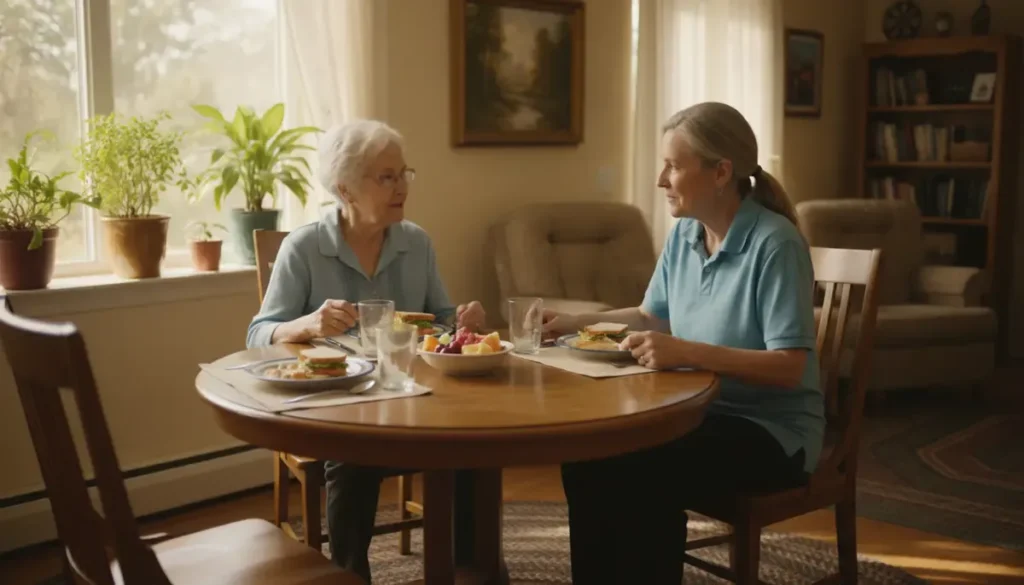
Adult day care programs can look similar in a brochure and feel very different in practice. One program may center on conversation, games, and a meal. Another may also help with personal care or keep an eye on health needs during the day. The older adult still goes home when the program ends. That return home is the point. The program is daytime support, not a new place to live.
Read about adult day care programs
This guide walks through the kinds of support a family can ask about. It is not a promise that any one program includes every item, and it is not medical advice. Shepherd Premier is a family-owned senior-living provider with small, home-style residences in Illinois and Wisconsin. Public materials describe daytime programs at the Robinson and Monticello, Illinois, homes. Those programs are not confirmed at every residence. A care conversation is how a family checks current fit, schedule, and availability. It does not guarantee admission or a written rate.
What support can adult day care programs include?
Think of support in layers. The first layer is the day itself: a place to be, people to see, and a rhythm the older adult can learn. Later layers cover meals, personal help, health questions, getting there, and how the team talks with the family. The Illinois Department on Aging describes adult day service as support for older adults who want to remain in the community but cannot be home alone during the day. Its description includes health monitoring, medication supervision, personal care, recreational and therapeutic activities, nutritious lunches and snacks, and a break for family caregivers. That is a state program description, not a menu for every private program.
A useful way to read any list is to split it into three columns in your notes. What is included on a typical day? What is available only if the person needs it? What is not offered at all? Ask the provider to mark those answers in writing. A phrase such as “activities and support” can mean a group game and a snack, or it can mean help with the restroom and a watched medication. The difference matters more than the brochure headline.
Shepherd Premier’s own adult day care programs page is the place to start for how the company talks about daytime support. Use this article to build your question list, then confirm the current program at the home you are considering.
Activities, company, and a steady daily rhythm
For many families, the first reason to look is company. An older adult may be safe at home and still spend long stretches alone. A program can offer conversation, music, games, simple crafts, or a quiet corner for someone who tires of a group. The better question is not “Do you have activities?” It is “How do you match the day to this person?”
Ask how the team handles someone who prefers to watch rather than join. Ask what happens if energy drops after lunch. A predictable arrival, activity, meal, and departure can help a person know what comes next. That rhythm is part of the support, even when no clinical service is involved.
Shepherd Premier highlights music therapy as part of its care programming, including at memory-care homes where daytime programs are also described. Music therapy is enrichment, not a separately priced clinical product, and it is not established at every property. If music, faith, or a quiet routine matters to your family, name that in the first conversation. For ideas you can compare with a program’s calendar, see activities for seniors.
Social time is not a cure, and it is not a reason to ignore safety at home after hours. It can make the day feel purposeful while the person still lives with family.
Meals, snacks, and help with the day’s routine
Meals are one of the easiest items to assume and one of the easiest to get wrong. Some programs serve a full lunch and snacks. Others expect the family to send food. Special diets, texture changes, and diabetes-friendly plates are separate questions. Do not stop at “Is lunch included?”
At Shepherd Premier’s Monticello home, public materials say the adult day program includes activities, companionship, and home-cooked meals in a safe, stimulating setting. The Robinson home describes an adult day care program for families who care for a loved one at home and need daytime support. Those sentences are specific to those two homes. They do not set the menu, the hours, or the price, and they do not mean every Shepherd Premier residence offers the same day.
Personal support belongs in the same conversation. A program may help with a coat, a walk to the restroom, or reminders during the day. It may not help with bathing, incontinence, or a two-person transfer. Ask what the team is staffed to do, and what would prompt a call home. Bring the person’s real morning: when they eat, how they move, and what usually needs a hand. That picture is more useful than a diagnosis alone.
Health questions, medication, and getting there
Health-related support is where families should slow down. A program name does not tell you who is on site, which medications can be given, or what happens if someone becomes ill. The Illinois description of adult day service includes health monitoring and medication supervision as services that centers in that program may offer. A private program may offer less, more, or something different. Ask who watches medication, whether the family must send it in original containers, and who calls if a dose is missed.
Also ask the illness plan. If the older adult has a fever, a fall, or new confusion, does the day stop? Who is called first? Is there a nurse, or is the plan to reach the family and emergency services? None of those answers is a clinical recommendation. They are operating facts you need before you rely on the schedule.
Transportation is its own line item. Some families drive. Some programs offer a ride in a limited area, sometimes for an added fee, and sometimes only when a vehicle is available. Shepherd Premier’s residential materials mention accessible transportation when available at certain homes. That is not the same as a standing ride to a daytime program. Confirm the pickup window, the area served, and whether a ride is part of the rate.
| Support to ask about. | What to confirm in writing. | Why it changes the fit. |
|---|---|---|
| Activities and social time. | Group size, quiet options, and how staff include someone who hangs back. | A busy calendar can still feel wrong for a person who tires or withdraws. |
| Meals and snacks. | What is served, special diets, and whether food is part of the rate. | A sent lunch and a served lunch are different plans for the family. |
| Personal support. | Restroom help, mobility, and what the team will not do. | Unstated limits show up on the first hard day. |
| Health and medication. | Who gives or watches medicine, and the plan if someone becomes ill. | Families cannot assume clinical coverage from the program name. |
| Transportation. | Area, schedule, vehicle access, and any extra fee. | A good program still fails if the person cannot get there. |
| Family communication. | Who calls, when, and what happens outside program hours. | The family still covers nights, weekends, and days off. |
What the program does for the family caregiver
A daytime program can give a caregiver a dependable window for work, an appointment, or rest. The Illinois Department on Aging notes that adult day service can also give respite to family caregivers, especially people who work outside the home. That break has edges. It lasts for the scheduled hours. It does not cover the night, a weekend, or a day the program is closed.
Ask how the team communicates. A short note at pickup, a call if something changes, and a named person for questions are all reasonable requests. Also ask what happens when needs grow. A program that fit in March may not fit in September. You want to hear that early, not on a morning when staff say they can no longer support the day.
If the need is a short stay away from home, that is a different service. Shepherd Premier describes respite at Robinson and Monticello as overnight or extended stays, separate from the daytime program. Read what respite care is before you treat a day program and a short stay as the same thing. For the wider set of ways families get a break, see caregiver support options.
How program support differs from living in a home
Adult day care programs and residential care can share words such as meals, activities, and supervision. The living arrangement does not. In a day program, the older adult returns home. In assisted living or memory care, the residence is responsible for the overnight hours as well. Mixing those up leads families to expect night coverage that a day program never offered.
Memory care is residential support for a person living with Alzheimer’s disease or another dementia. It is not a longer version of a day program. Some people attend a day program and later move to a residence. Some never need that move. Shepherd Premier’s published comparison, adult day services or memory care, is the article to use when the question is which setting fits. This article stays on what the daytime support can include.
If you are weighing a move, start with the care type rather than a town name. Memory care and the senior living locations pages show where Shepherd Premier has residences. Do not assume a town has a Shepherd Premier home, or that a home has a day program, unless that page says so.
A short list to bring to the care conversation
You do not need a perfect file. You do need the facts that change a yes into a no. Use this order so the conversation stays practical.
- Describe the current day: wake time, meals, mobility, memory changes, and who is home after hours.
- Name the hours and days you need, and ask which of those the program can actually staff.
- Walk the support list: activities, meals, personal help, medication, rides, and who calls the family.
- Ask what is included in the rate and what is billed separately. There is no single Shepherd Premier day-program price on the public pages.
- Ask what would make the program a poor fit, and what the next step would be if needs change.
Bring a second person if you can. One of you can listen while the other writes. Ask for the schedule, the inclusion list, and the rate in writing. A conversation helps you explore options. It does not reserve a place or lock a price.
Request a care conversation about daytime support, or call (847) 961-2551. Have the older adult’s routine and the days you need ready. The team can tell you whether a program is a current option at Robinson or Monticello, or whether another setting fits better. A call does not guarantee admission or availability.
Frequently asked questions
Do adult day care programs all include the same services?
No. Programs vary in hours, activities, meals, personal support, health services, and transportation. Ask for a written list of what is included, what costs extra, and what the program does not provide. Do not treat one home’s description as the standard for every location.
Does a day program mean the person lives there?
No. The person attends during scheduled daytime hours and returns home afterward. Overnight care is a different arrangement, such as respite or a residential move. Confirm the end time and who is responsible after departure.
Can someone living with dementia attend a day program?
Sometimes. It depends on the program, the person’s day, and the support available at home afterward. A dementia diagnosis alone does not decide fit. Share the real routine, including wandering, personal care, and what nights are like, and let the provider say whether the program can help.
Where does Shepherd Premier describe adult day care programs?
Public materials describe adult day care at the Robinson and Monticello, Illinois, homes, not at every residence. Schedules, capacity, transportation, and pricing can change. Confirm the current program directly rather than assuming it is open.
Will a care conversation give us a rate or a reserved spot?
No. A care conversation is a way to compare needs with current options. It does not guarantee admission, availability, or a written rate. Ask for itemized inclusions and any extra fees before you decide.
Sources
Illinois Department on Aging, Community Care Program: Adult Day Service. Eligibility rules and covered services can change. Confirm current details with the Department or a Care Coordination Unit. This article is general information for families, not a determination of eligibility or a care plan.