
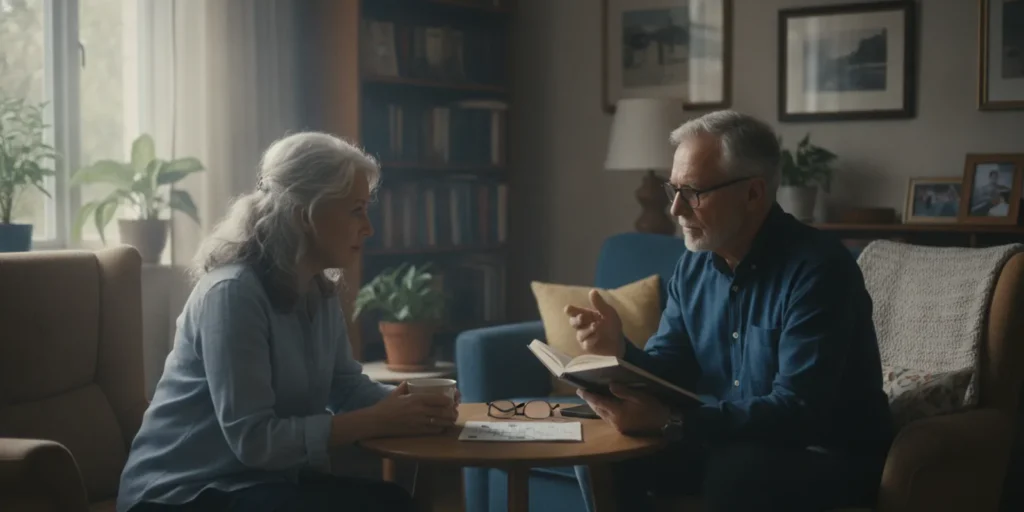
Choosing assisted living for couples means considering two people as individuals and the life they share. Partners may have different support needs, routines, preferences, and views about moving. Start by describing each person’s situation, then ask whether a particular home can consider both people’s needs and the couple’s wish to live together. Assisted living for couples does not automatically mean a shared room, a combined rate, or admission for both partners.
This guide offers a step-by-step way to compare care needs, routines, living arrangements, privacy, costs, and fit. It is not a medical assessment or a promise about what a residence can provide. Services, room arrangements, pricing, admission decisions, and availability depend on the specific location and circumstances. Ask each home directly, and give both partners room to participate in the decision.
What does assisted living for couples mean?
It means exploring whether two partners can live in the same residential setting while each receives support suited to that person. Both partners may need assistance with everyday activities, or one may need more support while the other is largely independent. A couple might hope to share a room, live in separate rooms nearby, or simply remain in the same community. The possibilities are specific to each residence and should be confirmed rather than assumed.
Separate the question into three parts:
- Can the home consider both partners? Ask how it learns about each person’s situation and what information it needs.
- Can it discuss a living arrangement that suits them? Ask what room options may be considered and what is currently possible.
- Can each person maintain a meaningful daily life? Discuss routines, privacy, personal interests, time together, and time apart.
A positive answer to one part does not automatically answer the others. A home may offer a care type that is relevant to one partner but not have a suitable arrangement for both. A room that appears appropriate may not suit either person’s support needs or preferences. The useful first outcome may be a list of questions and an explanation of the home’s process, not a final decision.
Assisted living and memory care are distinct settings, not interchangeable labels. Shepherd Premier describes assisted living services and memory care separately. Ask a specific location to explain its care type and whether it can consider both partners at that location. A general service description cannot establish individual fit.
How can couples make two useful care profiles?
Before comparing locations, write a short profile for each partner. The purpose is to describe ordinary days honestly, not to diagnose, predict decline, or make a clinical judgment. Include what is going well, what is difficult, when support may be needed, and which routines or preferences matter.
Consider these prompts separately for each person:
- Which everyday activities are comfortable to manage independently?
- Where is help already needed, such as bathing, dressing, grooming, mobility, meals, or medication routines?
- When is support most important: early morning, later in the day, overnight, or at particular moments?
- What interests, social preferences, familiar routines, and personal choices should a home know?
- What makes the person feel secure, respected, and involved?
- Are there questions that should be discussed with a clinician or another professional?
- What support does one partner currently provide to the other, and how sustainable does that feel?
Use examples instead of broad labels. “Needs extra time and occasional help getting dressed in the morning” gives a provider more context than “needs a lot of care.” If a partner feels unsteady when getting up at night, describe what the family has noticed without turning that observation into a medical conclusion. A residence can explain its process and services; a clinician is the right person for medical questions.
Include strengths and preferences alongside support needs. One partner may enjoy conversation, gardening, or group activities while the other prefers quiet and familiar routines. One may value a particular breakfast or time outdoors. These facts help a couple describe the life they want to preserve, not just the help that may be needed.
Turn observations into questions
Keep the two profiles separate and add a brief shared summary. Note what the couple hopes to preserve, what they hope will become easier, and what remains undecided. For each observation, record the context and when it occurs, if known. If a frequency is uncertain, write “not sure” rather than guessing.
For example, a family might explain that one partner needs more time to dress while the other likes an early start. This does not establish what a home can accommodate. It gives the home a concrete starting point for describing routines, what it may be able to discuss, and what further information it needs. Ask the provider to respond to each partner separately and then to the shared goal.
What if one partner needs more help?
Different support needs are common among couples considering a move. One person may need help with daily activities while the other mainly hopes for companionship or relief from household responsibilities. A partner who provides support may feel tired or worried; a partner receiving more help may be concerned about privacy or control. A respectful conversation recognizes both experiences without defining either person only by a care need.
Describe the needs separately and ask how a home evaluates each person and the couple together. Find out what information it needs, who participates in the discussion, and how it explains whether a location may be a fit. Do not assume that a general description of assisted living answers whether a particular location can support either partner.
Ask how the residence revisits fit if a person’s needs change. What changes prompt another conversation? Who should the family contact? What happens if the home concludes it cannot support a new need? These are home-specific questions. Do not assume that a future arrangement, clinical capability, or continued stay is guaranteed.
It may help to identify current responsibilities that the couple would like to change. For instance, a partner may currently handle most household tasks and reminders. List what the other person can do independently, what requires help, and which tasks have become stressful. Then ask the home how it describes its support for those tasks. Do not assume an advertised service includes every task or is available in the same way at every property.
One published survey about preferences among care options provides context about opinions on assisted living, but it is not a guide to a particular couple’s care fit, room options, or decision. A survey cannot replace a conversation about two individuals’ needs and priorities.
How should partners talk about a move?
Begin with curiosity rather than trying to persuade each other to agree immediately. Each person can answer: What do I hope would be easier? What am I afraid of losing? What would help me feel respected and involved? Listen without correcting or dismissing the answer. If one partner is hesitant, ask what information would make another conversation easier.
A couple might want fewer household responsibilities but worry about leaving a familiar neighborhood. One person may welcome support nearby while the other worries about privacy, schedules, or independence. Naming both sides helps the couple identify which concerns a home can answer and which require a personal decision or professional advice.
Agree on an initial step instead of demanding a final choice. It might be gathering information, writing down questions, asking a clinician about a concern, or learning how a home considers couples. A phone conversation does not commit anyone to move. If family members join, ask the couple who should participate, who will take notes, and who should receive follow-up. Keep both partners central whenever they can participate.
Try a short listening exercise
Set aside a quiet time. Let each person speak for a few minutes without interruption, finishing the sentence, “If we explore a move, I hope…” The other person summarizes what they heard before responding. Then switch roles and use “I worry that…” and “I would feel more comfortable if…” Record concerns in the speaker’s own words.
Sort the concerns into three groups: questions a residence can answer, questions for a clinician or adviser, and personal decisions that need more discussion. This helps prevent asking a provider to settle a disagreement that belongs to the couple. It also makes a first conversation less overwhelming: choose only a few questions that matter most now.
Which routines and preferences should couples compare?
Talk through an ordinary weekday and weekend, including wake-up times, meals, rest, hobbies, visitors, and time alone. Ask the location which routines it can discuss and which parts of daily life are shaped by its practices. A residence may not be able to reproduce every detail of home life, so identify what is essential, important, or flexible.
- Morning and evening: Do partners wake or sleep at different times? What support or quiet might each need then?
- Meals: Do they want to dine together, eat at different times, or sometimes choose a quieter setting? Ask what the home can accommodate.
- Social time: Would both enjoy shared activities, or does one prefer more time alone?
- Visitors: What should family understand about visits and expectations? Ask the home about its current practices.
- Personal belongings: Which photographs, books, or familiar items matter? Confirm room size and policies before moving belongings.
- Quiet and sleep: Do light, television, noise, or different sleep schedules affect comfort?
- Time together: What shared moments matter most, such as meals, conversation, or a regular activity?
A couple does not need to do everything together to preserve closeness. Shared meals can coexist with separate interests. Ask whether partners can make different choices about their day; the answer may depend on the home’s layout and routines. Avoid assuming that a couple must share activities or that each person’s preferences will be identical.
Make a simple routine map
Choose a typical day and create a timeline for each partner. Mark shared moments, separate activities, and times when support may be needed. For example, one person may wake early and read while the other wakes later and needs more time to dress. Both may prefer lunch together, followed by different afternoon activities. The purpose is not to demand an exact recreation of home life. It is to identify what matters and ask what flexibility exists.
Label each preference essential, important, or flexible. If a shared meal is essential, ask how meals work. If different wake-up times are flexible, note that too. This prevents every preference from being treated as a condition while protecting the routines that matter most. After a home answers, write down which details it confirmed, which it could not confirm, and which need follow-up.
What room and privacy questions should couples ask?
A shared room may seem like the obvious arrangement, but couples should ask what options the particular home can discuss and whether any could suit both people. Ask about room layout, storage, personal belongings, privacy, and what could happen if an arrangement no longer works. Current room availability and fit must be confirmed directly; a general page or a visit does not establish that a room is open.
- What room arrangements, if any, can be considered for two people?
- Can the home explain the layout and relevant policies before the couple decides?
- How are furniture and shared storage handled?
- What options can be discussed if partners want different sleeping arrangements?
- Where can the couple spend time together outside the room?
- What happens if either partner later wants more privacy or a different arrangement?
- How does the home approach privacy during personal support?
- What choices do residents have about visitors and time alone?
Look beyond the room. Ask how personal privacy is handled during assistance, how staff approach a room, and what choices residents have about visitors and time alone. Invite the provider to explain its own approach; do not infer practices from a tour or rely on a broad phrase.
Different sleeping schedules, television habits, light, and noise can affect comfort. Talk about how the couple manages these differences now and ask what room options could accommodate them, if any. Check dimensions and policies before moving belongings or buying furniture. Make a short list of essentials and items that can wait until the arrangement is clear.
Privacy also includes choice and respectful communication. Ask how each partner can express a preference privately, how the home shares information with family, and who may receive updates. The details may depend on the circumstances and the home’s policies. Do not assume that being a spouse automatically resolves every communication or decision-making question; clarify who the partners want involved and what permissions or documents the home may need.
How can families compare locations fairly?
Begin with the specific location, not only a company name or general service description. Services, rooms, staffing, pricing, capacity, and availability may differ by property. Shepherd Premier offers assisted living and memory care at Sterling and memory care at Dixon according to the supplied location facts. That does not establish that either home can accommodate a particular couple. Ask the location directly about both people’s circumstances and current options.
Use the locations directory as a starting point, then confirm details with the home. A directory is not a vacancy report. A stated capacity does not prove a room is open, and a service description does not confirm individual fit. If a couple is considering more than one address, ask the same core questions at each one.
Record the answer, date, and who provided it. Separate confirmed facts from preferences and unknowns. The table below can be copied into a notebook or spreadsheet. Make a separate column for each location, and note whether an answer is written, verbal, or still pending.
| Topic | Ask the home | Record |
|---|---|---|
| Care fit | How does it consider each person’s needs? | Separate answers and follow-up requested |
| Living arrangement | What possibilities can be discussed for two people? | Confirmed options and unknowns |
| Daily life | Which routines can it discuss or accommodate? | Shared and individual preferences |
| Privacy | How does it explain privacy, visitors, and time alone? | Policies and open questions |
| Cost | How is each person’s rate determined? | Written details and exclusions |
| Changing needs | How does the home revisit fit? | Process, contact, and limits |
Compare answers, not impressions alone. Mark each response “clear,” “partly answered,” or “unknown.” If locations give different answers, ask whether their practices differ or whether one person needs to follow up. Do not fill a blank with an assumption.
Use a like-for-like comparison
For each location, place the two partner profiles alongside the answers about the home. This makes it easier to spot a mismatch. For example, if one partner prefers quiet and the other likes group activities, note whether the home explained choices available to residents rather than simply describing an activity calendar. If a couple wants time together, record what the home confirmed about shared spaces and what remains uncertain.
Keep facts and impressions in separate columns. “The room size was confirmed by the home” is a factual note; “the room felt comfortable” is a personal impression. Both may matter, but they answer different questions. If a response relies on a future review, write down who will provide it and when you expect to follow up. If a point cannot be verified, label it unknown rather than treating it as a promise.
What should couples ask about safety and support?
Make safety questions personal and concrete. Instead of asking only whether a place is safe, explain the concern and ask how the home approaches it. If a partner has difficulty moving around, describe the situation and ask what information is needed to discuss support. If memory changes raise concerns about getting disoriented, ask the home to explain relevant practices and limits.
- How does the home learn about each resident’s needs and preferences?
- Who should a family contact with a question or concern?
- What support does the home describe for the daily tasks relevant to each partner?
- What should the family know about the home’s approach to medication needs?
- How does the home explain situations it may not be able to support?
- What happens if one person’s needs change?
- How does the home communicate with the residents and the people they have authorized?
Ask for clear explanations. Do not assume a service offered at one location is offered at another, or that marketing language establishes a clinical level of care, staffing arrangement, or regulatory status. For medical judgment, consult a health professional. A care conversation cannot guarantee a health outcome or replace individualized medical advice.
When discussing safety, be specific about what the couple wants to understand. A family could ask, “My spouse sometimes needs more time to move from bed to chair. What information do you need to discuss whether this is within the support you provide?” That wording invites a home-specific answer without asking the provider to make a diagnosis. If the answer is unclear, ask who can clarify it and whether another professional should be involved.
How should couples compare costs?
Do not assume a couple pays one combined rate, receives a discount, or has the same charges as another couple. Pricing can depend on the home, room arrangement, support needs, and other details. Ask for written information and clarify whether it is an estimate, starting amount, or individualized quote. A care conversation or visit does not guarantee a written rate or admission.
Ask how the rate is determined for each partner, whether the room affects the amount, what is included, what may cost extra, and how charges can change. Shepherd Premier’s payment information states that private pay, VA benefits, and long-term care insurance are accepted, while Medicaid is not. Confirm what applies at the particular home and verify benefit eligibility with the relevant program or insurer. Acceptance does not establish eligibility or coverage of a particular bill.
For background, see the senior care guide, then request current itemized information from the home. Do not compare one home’s starting price with another’s complete quote as if they describe the same arrangement.
Build a like-for-like worksheet
Use separate columns for Partner A, Partner B, shared room charges, included items, possible additional charges, and unresolved questions. If a written quote leaves a blank, do not enter zero; mark it “not confirmed.” Ask what each figure covers, how many people it includes, what room arrangement it assumes, and what could change the total. Date the information and save the written response.
Then compare the estimate with the household budget and known payment sources. Verify coverage with the relevant program, insurer, or adviser. Ask what a change in one partner’s needs could mean for that person’s costs and how the home communicates changes. This supports planning without predicting a future rate.
When looking at two quotes, identify the unit each number describes. One figure may be a base amount for a room, while another may reflect an individualized arrangement. Ask whether the quoted amount is for one person or two, whether any care-related charges are separate, and whether fees depend on a later review. If a cost is described verbally, request written clarification before using it in a budget.
How can couples prepare for a care conversation?
Each partner can write priorities, concerns, and questions in advance. Agree on a few topics that must be discussed. Bring a brief description of each person’s daily support needs and routines, if appropriate, and ask the home what further information it needs. A short, organized conversation may be easier than trying to cover every possible issue at once.
- Explain each partner’s situation separately, then describe shared living goals.
- Ask what can be confirmed now and what requires further review.
- Write down answers about rooms, services, costs, and changes in need.
- Ask which items remain unknown and who will follow up.
- Check that both partners feel heard and have time to consider the information.
- Agree who may receive follow-up and how the couple prefers to communicate.
A visit can help families understand a setting, but does not guarantee admission, a room, or a particular care arrangement. Take time afterward to compare notes and identify unanswered questions.
Prepare before, during, and after
Before: Choose the most important questions, decide who will take notes, and ask whether a family member should join. If long conversations are tiring, ask whether topics can be handled in a manageable order. Each partner can mark which questions they want to ask personally.
During: Explain two individual care pictures and the couple’s shared goals. If an answer is “it depends,” ask what it depends on and what information would make it more specific. Avoid treating an initial discussion as a final commitment. Pause to check that both partners understand the response and have a chance to ask a follow-up.
After: Each partner can note what was clear, what felt comfortable, and what remains unanswered. If memories of an answer differ, check with the person who provided it. Send a concise follow-up list and keep the reply with the comparison notes. Set a time to review the information together, without treating that date as a deadline to move.
What if partners disagree about moving?
Disagreement may mean each person is weighing different risks or needs more information. One partner may be ready to explore support while the other is not ready to leave home. Ask what information or change would make another conversation easier. Sometimes the first shared decision can be simply to learn more.
- Reflect the concern: Summarize what you heard before responding.
- Separate decisions: Learning about a home is not the same as choosing to move.
- Find a shared goal: Both may want connection, less worry, or a manageable daily life.
- Invite a trusted neutral person: With agreement, a clinician or adviser may help, without replacing the couple’s voices.
- Set a time to revisit: Agree when to talk again if no immediate safety issue requires prompt attention.
If there are urgent health or safety concerns, contact an appropriate professional or emergency service rather than relying on a blog or residential visit. Otherwise, a gradual conversation may give both partners room to process change.
When one partner is unsure, agree only to gather information. They might read about home care and residential support, make a list of questions, or have an initial call. Exploring is not consent to a plan. A couple can review what they learn, consider professional advice where relevant, and decide whether another conversation is useful.
How can couples keep the decision manageable?
A decision involving two people can create a long list of questions. Make the process manageable by separating what must be known now from what can wait. For example, a couple may first need to know whether a location can consider both partners and what information is needed to discuss care fit. Details about furniture or favorite activities may be important later, once a possible living arrangement is clearer. This order helps the first conversation stay focused without dismissing smaller concerns.
Try a three-step review after each conversation. First, each partner names one thing they learned and one thing they still want to understand. Second, compare those notes and correct any differences by checking with the person who gave the information. Third, agree on one next action: send a follow-up question, speak with a clinician, compare a written quote, or pause and revisit the discussion. One concrete action is often easier to complete than a broad goal such as “decide what to do.”
Keep a shared record, but preserve each person’s own view. A simple page can include the date, location, questions asked, answers, unanswered items, and the next step. Add a separate note for each partner’s reaction: what felt reassuring, what raised concern, and what they want to think about. These reactions do not need to match. They show where another conversation or explanation may be useful.
It can also help to set boundaries around information gathering. Decide together how many locations to contact at first and when to pause for reflection. If one partner becomes tired or distressed, take a break rather than pressing for a conclusion. If the couple has agreed to involve family, make clear what role family members will play: listening, taking notes, arranging a conversation, or helping compare information. Support should make it easier for the partners to express their preferences, not replace their voices.
Finally, distinguish urgency from pressure. A genuine health or safety concern may call for prompt contact with a qualified professional. A home’s availability, a family member’s preference, or the wish to settle uncertainty quickly does not by itself answer whether a move is right. Ask what needs immediate attention, what needs reliable information, and what belongs to the couple’s own decision. This can make room for careful choices while still addressing concerns that should not be delayed.
What questions should couples ask before choosing?
Use this final checklist to see whether the important issues have been discussed. A blank answer is not a failure; it is a signal to ask again or get more information.
- Has each partner described what matters to them in their own words?
- Does the home understand each person’s needs separately?
- Has the home explained its process for considering the couple together?
- Have room and privacy questions been answered rather than assumed?
- Have you discussed meals, visitors, activities, sleep, and quiet time?
- Do you understand how costs are presented for two people and what remains uncertain?
- Have you asked what happens if needs change?
- Are unanswered questions, the person responsible for follow-up, and next steps written down?
Use the same questions at each location when practical. Distinguish a clear answer from a possibility that still needs confirmation, and make space for each partner’s preferences. A couple may need to compare residential support with remaining at home or receiving help at home. These are different options, and neither is automatically right for every couple. Review the household’s circumstances, ask what help is needed and when, and consult a trusted professional as appropriate.
As a final exercise, each partner can privately rank three priorities: time together, familiar routines, privacy, proximity to family, or a manageable level of responsibility. Each can name one concern that needs an answer. Compare the lists; shared priorities can guide questions, while different priorities deserve attention rather than dismissal.
Sort information into three columns: confirmed, needs confirmation, and personal preference. A home may confirm the care type it offers, while a room arrangement still needs discussion. A desired routine is a preference to ask about, not an established service. This distinction helps prevent a general description from being mistaken for a specific commitment. If a key question remains unresolved, ask who can clarify it before treating the decision as settled.
Talk with Shepherd Premier about your family’s needs
Choosing assisted living together begins with two individual care pictures and a shared conversation about the life the couple hopes to maintain. Compare routines, privacy, room possibilities, support needs, and costs at the specific home, and keep confirmed information separate from questions that still need answers. A home-specific conversation can help you understand possible options and next steps without assuming that every couple or residence is the same.